



Loader Hamer
Loader Pad
Loader Effect
10 tips on how to find the best divorce lawyer in pune

10 Tips on How to Find the Best Divorce Lawyer in Pune?

10 Tips on How to Find the Best Divorce Lawyer in Pune? Divorce is one of the most emotionally and legally challenging experiences one can go through. Whether it’s a mutual separation or a contested case, the process becomes much smoother when you have the right legal support. If you’re in Pune and looking for a qualified, dependable, and empathetic divorce lawyer, here are the top 10 practical tips to help you find the best one for your situation. 1. Understand Your Divorce Type (Mutual vs. Contested) Before you begin your lawyer hunt, understand what kind of divorce you’re filing for: Mutual Divorce: When both parties agree to separate amicably Contested Divorce: When there’s disagreement on issues like custody, alimony, or property 2. Look for Lawyers Who Specialize in Family Law Not every lawyer is trained in family or matrimonial law. These cases require sensitivity and specific legal expertise. Look for lawyers in Pune who specialize in: Divorce proceedings Child custody Maintenance and alimony Domestic violence cases You can use platforms like LawRato, JustDial, or the Bar Council of Maharashtra to find the best family lawyer in Pune for your case. 3. Check Their Experience with Pune Family Courts The Family Court at Shivajinagar is where most divorce cases in Pune are filed. A local lawyer will: Be familiar with Pune’s court procedures Know how judges handle cases Handle paperwork more efficiently 4. Ask About Past Case Results and Client Reviews Check for: Number of cases handle Success stories in similar situations Online reviews and ratings Look for feedback about their professionalism, communication, and ability to handle tough situations. 5. Assess Communication Style and Availability Your lawyer should: Respond promptly Explain legal processes in simple terms Be available for consultations and court dates The initial consultation is a great time to evaluate how approachable and attentive they are. 6. Discuss Fees Upfront (And Get It in Writing) Transparency in billing builds trust. Ask about: Hourly vs. flat fees Extra costs (e.g. documentation, filing) Estimated total cost for your case In Pune, legal fees for mutual divorce range from ₹10,000 to ₹50,000. Get a written fee agreement before starting. 7. Evaluate Their Mediation and Negotiation Skills A good lawyer will aim to resolve disputes peacefully. Strong mediation skills can: Reduce emotional strain Save time and money Lead to quicker settlements Ask about their past experience in negotiated divorce settlements. 8. Consider Gender Comfort and Personal Fit It’s okay to choose a lawyer based on personal comfort—especially when dealing with sensitive issues like abuse or custody. Some women in Pune prefer female lawyers for emotional ease, while others focus on experience regardless of gender. Choose what feels right for you. 9. Check for Bar Council Registration and Ethics Make sure the lawyer is: Registered with the Bar Council of Maharashtra Practicing ethically and professionally Clear about your legal rights and responsibilities You can verify registration through official websites or by asking for their enrollment ID. 10. Take a Trial Consultation Before Committing Most lawyers offer a first consultation (free or at a nominal fee). Use this to: Understand their approach Ask case-specific questions Gauge your comfort level Don’t rush your decision unless the situation is urgent. Your Legal Journey Starts with the Right Guide Finding the best divorce lawyer in Pune is not just about qualifications—it’s about compatibility, trust, and the right experience. With these tips, you’ll be better equipped to choose a legal partner who will protect your rights and guide you through every step of the process. More than 2 results are available in the PRO version (This notice is only visible to admin users) Most Recent Posts All Posts Articles Divorce Law Who Gets Child Custody After Divorce in India? – Copy Who Gets Child Custody After Divorce in India? Essential Documents You Need to File for Divorce in India Category Divorce (19) Law (19) Explore Our Services Empower Your Future with Expert Legal Guidance. Consult with Leading Divorce Lawyers at Adv.Mayur N. Gajbhiye for Professional, Compassionate Representation, Ensuring a Smooth and Informed Legal Journey. Explore More
Read more
What rights does a wifehusband have in divorce in india

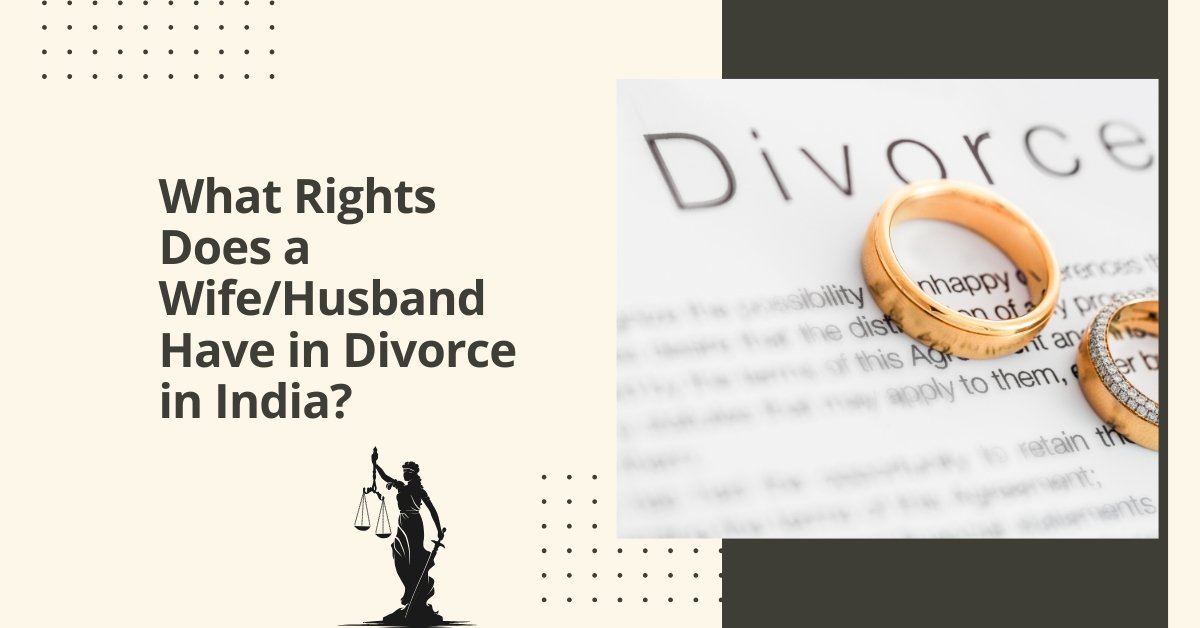
What Rights Does a Wife/Husband Have in Divorce in India?

What Rights Does a Wife/Husband Have in Divorce in India? Divorce is a deeply emotional and often complex legal process. In India, personal laws govern the rights of spouses in divorce, and these can vary based on religion and the type of marriage. Whether you’re a husband or wife, understanding your legal rights is essential for making informed decisions during a separation. This blog will guide you through the key rights that both wives and husbands have in a divorce under Indian law—covering property, maintenance, child custody, residence, and protection from abuse. Equal Rights Under Indian Divorce Law Indian divorce laws are not entirely gender-neutral, but they strive for fairness. Under laws like the Hindu Marriage Act, 1955, Special Marriage Act, 1954, Muslim Personal Law, and Indian Divorce Act (for Christians), both husbands and wives have rights and responsibilities based on the nature of their marriage and religion. While women may have certain additional protections (especially in cases of abandonment or abuse), both spouses have enforceable legal rights. Grounds for Divorce Under the Hindu Marriage Act, both the husband and the wife have equal rights to seek divorce on grounds such as: Cruelty (mental or physical) Adultery Desertion for over 2 years Conversion to another religion Mental disorder Incurable disease Non-resumption of cohabitation after a judicial separation Both parties also have the right to file for mutual consent divorce, provided they’ve been living separately for at least one year and have agreed on alimony, custody, and property matters. Right to Maintenance and Alimony Wife’s Rights: Under Section 24 and 25 of the Hindu Marriage Act, a wife can claim maintenance during and after divorce. If the wife is unemployed or unable to support herself, she can request: Interim maintenance (during divorce proceedings) Permanent alimony (a lump sum or monthly support post-divorce) Even working wives can claim maintenance if their income is significantly lower than that of their husband. In Muslim law, a wife is entitled to mehr, maintenance during iddat, and sometimes compensation or settlement beyond that, based on recent Supreme Court judgments. Husband’s Rights: While traditionally less common, Indian courts do recognize that a husband can claim maintenance if he is physically or mentally unfit to work, and the wife earns significantly more. This is upheld under Section 24 of the Hindu Marriage Act, which applies to either spouse. Right to Child Custody and Visitation Child custody decisions in India are governed by the Guardians and Wards Act, 1890, and focus on the best interest of the child rather than the gender of the parent. Wife’s Rights (Mother): Can seek sole custody or joint custody Usually granted custody of young children (especially below 5 years), but this is not a hard rule Has the right to seek visitation regulations or prevent unsafe interactions with the other parent Husband’s Rights (Father): Has equal rights to apply for custody or joint custody Entitled to visitation rights, even if the mother is awarded custody Can challenge or modify custody orders if circumstances change Courts generally prefer co-parenting arrangements if both parents are fit and willing to care for the child. Property Rights After Divorce Wife’s Rights: In India, women do not automatically gain rights over the husband’s self-acquired property after divorce. However, she has rights to: Streedhan (gifts and assets given during marriage, including jewelry, cash, etc.) Maintenance, which can help her maintain the same standard of living A residence, even if it’s not in her name, under the Protection of Women from Domestic Violence Act, 2005 If the property is jointly owned, she has the legal right to her share or compensation. Husband’s Rights: Husbands retain rights to: Property acquired in their name Protection from false claims of shared ownership if the wife’s name is not on documents Seek division or settlement in joint property cases Courts may direct sale or compensation based on individual contributions to property acquisition during marriage. Right to Residence Under Indian law, a wife has the right to reside in the matrimonial home regardless of whether her name is on the ownership documents. This is protected under: Domestic Violence Act, 2005 Hindu Adoption and Maintenance Act, 1956 Even after separation or while divorce proceedings are ongoing, the wife can request continued residence or alternate accommodation. Husbands do not have an equivalent legal “right” to stay in the wife’s house unless they co-own the property. Protection from Abuse or Harassment Women have stronger legal protection against emotional, physical, and economic abuse. Rights include: Protection orders under the Domestic Violence Act Residence orders to prevent eviction Monetary relief for medical expenses or loss of earnings Custody orders for children Compensation for mental torture or emotional distress Men facing false accusations can file counter-cases for defamation, seek quashing of FIRs, or file for custody of children in case of parental alienation. The courts are becoming more sensitive to men’s rights as well, though protective legislation remains primarily female-focused. Legal Representation and Fair Trial Whether husband or wife, both spouses have equal rights to: File for divorce or legal separation Hire legal representation Seek mediation or counseling before trial Receive a fair and unbiased hearing Appeal the court’s decision if dissatisfied with the outcome The process may vary slightly depending on whether it’s a family court case under Hindu law, or a civil court case under the Special Marriage Act or Christian/Muslim laws. Seeking Legal Guidance During Divorce Divorce is more than just the end of a marriage—it’s a turning point that can impact your finances, children, living situation, and emotional well-being. Whether you’re a husband or wife, knowing your legal rights helps you make informed decisions and avoid costly mistakes. Because divorce laws in India vary based on personal laws and specific circumstances, it’s important to have expert legal advice. If you’re looking for the right support, consider consulting the best divorce lawyer in Pune to help protect your interests and guide you through the legal process with clarity and confidence. More than 2 results are available in
Read more
Divorce law reforms in india_ changes over the years and their impact

Divorce Law Reforms in India: Changes Over the Years and Their Impact

Divorce Law Reforms in India: Changes Over the Years and Their Impact Divorce laws in India have undergone significant changes over the years. Historically, divorce was a rare occurrence in Indian society, largely due to cultural and religious factors that emphasized the sanctity of marriage. However, as society evolved, so did the legal framework surrounding divorce. Over the years, reforms were introduced to provide individuals with more freedom, fairness, and equality in divorce proceedings. This article takes a closer look at the changes in divorce laws in India and their impact on individuals and society. The Early Legal Framework for Divorce in India Before the enactment of formal divorce laws, the concept of divorce in India was largely governed by personal laws based on religion and community. Hindu marriages were governed by the Hindu Marriage Act of 1955, while Muslim, Christian, and Parsi marriages were governed by separate personal laws. Divorce was not recognized under Hindu law until the 1950s, and the concept of “divorce” as understood in modern legal terms was largely foreign to traditional Indian communities. Under Hindu law, divorce was largely a one-sided affair, where the husband had greater rights to dissolve the marriage. Women had few options and often had to endure unhappy marriages without recourse. The laws governing divorce in other communities, such as Muslims, Christians, and Parsis, were similarly restrictive and based on community practices. The Hindu Marriage Act, 1955 The Hindu Marriage Act, enacted in 1955, was a landmark in the history of divorce laws in India. For the first time, divorce was legally recognized for Hindus, Buddhists, Sikhs, and Jains. The Act laid down provisions for divorce and annulment based on mutual consent or fault grounds. These fault grounds included adultery, cruelty, desertion, and mental illness. While the Hindu Marriage Act provided a legal framework for divorce, it still contained several biases against women. The Act made it difficult for women to seek divorce on equal terms with men, and the grounds for divorce were still heavily tilted in favor of men. For example, if a woman wanted to file for divorce on grounds of cruelty, she needed to provide evidence of physical or emotional abuse. This made it difficult for many women to seek legal separation. The Introduction of Mutual Consent Divorce In 1976, a significant reform was introduced through the introduction of mutual consent divorce under the Hindu Marriage Act. This allowed both spouses to mutually agree to dissolve their marriage, bypassing the lengthy and often difficult process of proving fault grounds like adultery or cruelty. The reform provided a more amicable and less contentious method of divorce. Mutual consent divorce required both parties to agree to the dissolution of the marriage, and they had to wait for a period of six months before the divorce was granted. While this provision was a step forward in making divorce more accessible, the six-month waiting period posed a significant challenge for individuals who wanted a quick resolution. The Divorce Law (Amendment) Act, 2019 The year 2019 marked another important change in divorce laws with the introduction of the Divorce Law (Amendment) Act. This reform focused on reducing the time frame for obtaining a divorce, especially in cases of mutual consent divorce. The amendment reduced the mandatory waiting period for mutual consent divorce from six months to three months. Additionally, the reform addressed the issue of alimony and maintenance. The Divorce Law (Amendment) Act emphasized that maintenance should be provided in a fair and timely manner, with a focus on ensuring the financial well-being of the spouse seeking maintenance. The Act also aimed at reducing the financial burden of divorce proceedings, which often led to long, drawn-out battles in courts. The Impact of Divorce Law Reforms Increased Access to Divorce One of the major impacts of divorce law reforms in India has been the increased access to divorce for individuals, especially women. The reforms introduced in 1955 and later in 1976 allowed couples to seek legal separation on equal terms, regardless of gender. The introduction of mutual consent divorce, in particular, allowed individuals to dissolve their marriages amicably, avoiding lengthy and contentious court battles. In addition, the reduction in waiting periods under the Divorce Law (Amendment) Act has made it easier for individuals to move on with their lives without unnecessary delays. This has given couples the ability to close a chapter in their personal lives and begin anew with greater freedom. Improved Rights for Women Over the years, divorce law reforms in India have had a positive impact on women’s rights. While the early divorce laws under the Hindu Marriage Act were heavily biased against women, subsequent reforms have provided women with more rights and protections in divorce proceedings. Women now have greater access to maintenance and alimony, and the process of seeking divorce has become more equitable. The provision for mutual consent divorce has particularly helped women, as it has allowed them to seek divorce without having to prove fault grounds like cruelty or adultery. This has been especially beneficial for women in abusive marriages, as they no longer need to endure further suffering in order to obtain a divorce. Social Change and the Erosion of Stigma Divorce used to carry a significant social stigma in India, especially for women. The idea of being divorced was seen as a failure of the marriage, and divorced women often faced judgment and social exclusion. However, with the changing legal landscape and the growing number of divorce cases, this stigma has gradually diminished. The legal recognition of divorce, along with the reforms that have made it easier to obtain, has contributed to the changing perceptions of divorce in Indian society. Today, more individuals are choosing to divorce when they are unhappy in their marriages, and divorce is increasingly seen as a personal choice rather than a societal failure. Challenges and Future Prospects Despite the positive changes, several challenges remain. The process of obtaining a divorce can still be lengthy and costly, especially in
Read more

Decision Are A Professional Attorney & Lawyers Services Provider Institutions. Suitable For Law Firm, Injury Law, Traffic Ticket Attorney, Legacy And More.

Contact Info

+(002) 0121-2843-661
+(002) 0106-8710-594
AR-Coder@arcoder.com
Support@arcoder.com
Menouf City , El-Menoufia, Egypt.
Shibin El-Kom , El-Menoufia, Egypt.

Follow Us

Click to Call