


Summary – Probate of a Will is a legal process in India through which a court verifies the authenticity of a deceased person’s Will and grants authority to the executor to distribute the property according to the wishes mentioned in the Will. It plays an important role in resolving property disputes among legal heirs by legally validating the Will, preventing fraudulent claims, and ensuring smooth transfer of assets. Understanding the probate procedure, required documents, timelines, and legal implications can help families avoid unnecessary conflicts and protect their inheritance rights.
Property disputes after the death of a family member are becoming increasingly common in India. Even when a person leaves behind a Will, disagreements may still arise among legal heirs regarding property ownership, distribution of assets, or the authenticity of the Will. In such situations, the probate of a Will becomes an important legal process.
In India, probate may be mandatory in certain cases, especially for immovable properties located in cities like Mumbai, Chennai, and Kolkata. In this blog, we will explain the complete probate process in India, including its legal importance, required documents, court procedure, timelines, costs, and how it helps resolve property disputes effectively.
What is Probate of a Will?
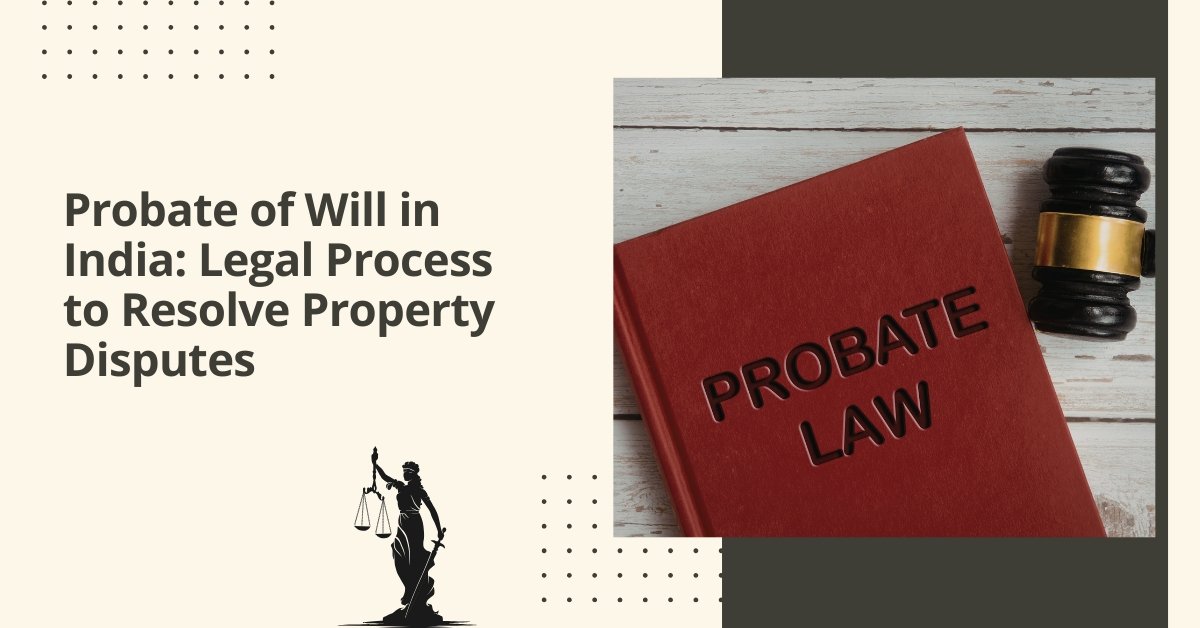
Probate of a Will is a legal process through which a court verifies and certifies that a deceased person’s Will is genuine and legally valid. Once the court grants probate, the executor named in the Will receives the legal authority to manage and distribute the deceased person’s property and assets according to the wishes mentioned in the Will.
Probate acts as official proof that the Will can be legally accepted and implemented. It helps prevent fraudulent claims, protects the rights of beneficiaries, and ensures that the property is transferred smoothly without unnecessary disputes among legal heirs.
Why Probate is Important in Property Disputes?
Probate is important in property disputes because it legally confirms that a Will is genuine and valid. After the death of a person, disagreements often arise among legal heirs regarding property ownership, asset distribution, or the authenticity of the Will. Probate helps resolve these disputes by giving court-approved authority to the executor to distribute the property according to the wishes mentioned in the Will.
Probate also helps prevent fraud and future legal complications. If any family member challenges the Will on grounds such as forgery, undue influence, or mental incapacity of the deceased person, the court examines the evidence before granting probate. Many banks, financial institutions, and property authorities also require probate before transferring assets or property ownership.
When is Probate a Mandatory Requirement in India?
Probate is not required for every Will in India. Under Section 213 of the Indian Succession Act, probate becomes compulsory in specific situations where legal validation of the Will is necessary before the property can be transferred.
Probate is generally mandatory in the following cases:
- When the Will belongs to a Hindu, Sikh, Buddhist, or Jain and the property is located in Mumbai, Chennai, or Kolkata.
- When the deceased person was a Christian or Parsi, irrespective of where the property is situated in India.
Even if the Will is registered and there are no disputes among family members, probate may still be legally required in these cases. Without probate, the executor may face difficulties in transferring ownership of assets or carrying out the wishes mentioned in the Will.
Step-by-Step Probate Process in India
1. Filing the Probate Petition
The probate process starts with filing a probate petition before the competent court, usually in the jurisdiction where the deceased person resided or where the property is located. The petition is generally filed by the executor named in the Will. If no executor is appointed, an eligible legal heir may approach the court for legal authority.
2. Submission of Original Will and Supporting Documents
The executor must submit the original Will along with important supporting documents such as the death certificate of the deceased person, identity proof, address proof, property papers, and details of all legal heirs and beneficiaries. These documents help the court verify the authenticity of the claim.
3. Payment of Court Fees
After the petition is filed, the applicable court fees must be paid. Probate court fees are usually calculated based on the value of the assets or property mentioned in the Will and may differ from one state to another.
4. Issuance of Notices to Legal Heirs
The court then issues notices to all legal heirs, beneficiaries, and interested parties informing them about the probate proceedings. This gives them an opportunity to raise objections if they disagree with the Will or the probate application.
5. Publication of Public Notice
In many probate cases, the court may direct publication of a notice in a newspaper to invite objections from the general public. This step helps ensure transparency and prevents fraudulent claims related to the property or inheritance.
6. Verification and Examination of the Will
The court carefully examines the Will and verifies whether it was executed legally and voluntarily by the deceased person. Witnesses to the Will may also be called to confirm its authenticity and execution before the court.
7. Handling Objections or Contested Probate Cases
If any legal heir or interested party challenges the Will on grounds such as forgery, undue influence, coercion, or mental incapacity, the matter becomes a contested probate case. The court then reviews evidence, hears arguments from both sides, and decides the matter based on legal proof.
8. Grant of Probate by the Court
If the court is satisfied that the Will is genuine and legally valid, it grants probate to the executor. Once probate is granted, the executor receives legal authority to manage, transfer, and distribute the deceased person’s assets according to the wishes mentioned in the Will.
Documents Required for Probate of Will
To apply for probate of a Will in India, certain important documents must be submitted before the court for verification and legal processing. These documents help establish the authenticity of the Will, identify the legal heirs, and confirm the ownership of the deceased person’s assets and property.
The commonly required documents for probate include:
- Original Will of the deceased person
- Death certificate of the deceased
- Identity and address proof of the executor or petitioner
- Property ownership documents and asset details
- List of legal heirs and beneficiaries
- Passport-size photographs of the petitioner
- Affidavit or declaration by the executor
- Details and identity proof of witnesses to the Will
- Valuation report of the property or assets, if required by the court
- No-objection certificates (NOC) from legal heirs, if available
Important Supreme Court Judgments on Probate
H. Venkatachala Iyengar vs B.N. Thimmajamma
In this landmark judgment, the Supreme Court held that the person seeking probate must prove that the Will was executed properly, voluntarily, and by the deceased person while being of sound mind. The court also stated that if there are any suspicious circumstances surrounding the Will, they must be satisfactorily explained before probate can be granted.
Jaswant Kaur vs Amrit Kaur
The Supreme Court ruled that merely submitting a signed Will is not enough to obtain probate. The court must be fully satisfied that the Will genuinely represents the free and independent wishes of the deceased person and was not made due to fraud, coercion, or undue influence.
Gurdev Kaur vs Kaki
In this case, the court clarified that probate proceedings are limited to verifying whether the Will is genuine and legally valid. Probate courts do not decide property ownership or title disputes while granting probate.
Sridevi vs Jayaraja Shetty
The Supreme Court observed that when a Will contains suspicious or unusual circumstances, stronger evidence and proper witness testimony are necessary to establish its authenticity before granting probate.
Daulat Ram vs Sodha
The court emphasized that a Will must be executed and witnessed according to the legal requirements mentioned under the Indian Succession Act. Proper examination of witnesses plays an important role in proving the validity of the Will.
When Should You Hire a Probate Lawyer?
Hiring a probate lawyer becomes important when the probate process involves legal complexities, disputes among family members, or challenges related to the validity of the Will. If the Will is being contested on grounds such as fraud, forgery, undue influence, or mental incapacity of the deceased person, a probate lawyer can help protect your legal rights and properly represent your case before the court.
A probate lawyer can guide you through the entire probate process, including preparing legal documents, filing the probate petition, handling court procedures, and responding to objections raised by other parties. Their expertise helps avoid delays, legal errors, and future disputes related to property inheritance.
Secure Your Legal Rights
Handling property matters after the death of a loved one can often become legally and emotionally challenging, especially when disagreements arise regarding the Will or distribution of assets. If you are dealing with probate proceedings, contested Wills, or inheritance-related disputes, getting professional legal guidance can make a significant difference. Consult an experienced probate lawyer in Pune to receive proper legal support, protect your rights, and ensure a smooth and legally secure probate process.
Frequently Asked Questions
- All Posts
- Child Custody
- Criminal
- Divorce
- Family
- Law
- Property